Introduction
Investing for beginners can feel overwhelming, but it’s one of the most effective ways to grow your wealth and secure financial freedom. With the right knowledge and strategy, anyone can start investing, even with a small amount of money. In this guide, we’ll explain the basics of investing, types of investment options, risk management strategies, and practical tips to get started. You’ll also see real-life examples of beginners who successfully built wealth over time. Whether you’re saving for retirement, a major purchase, or long-term financial security, this article will give you the confidence to make informed decisions and take control of your financial future.
Why Investing Matters
Wealth Growth: Money in a savings account grows slowly; investing accelerates wealth accumulation.
Beat Inflation: Proper investments help maintain and increase purchasing power.
Financial Freedom: Achieving long-term goals like retirement, home ownership, or business ventures.
Mini-Case Study:
Aisha invested $200 per month in a low-cost index fund. After 10 years, her investment grew to over $36,000 due to compound interest.
Step 1 – Understand Your Financial Goals

Short-term goals: 1–3 years (vacation, small purchases)
Medium-term goals: 3–7 years (car, home down payment)
Long-term goals: 7+ years (retirement, education fund)
Tip: Your investment choices should align with your goals and risk tolerance.
Step 2 – Learn About Investment Options
Stocks: High growth potential but higher risk.
Bonds: Lower risk, steady returns.
Mutual Funds & ETFs: Diversified investments managed by professionals.
Real Estate: Long-term investment with rental income potential.
Retirement Accounts (401k, IRA): Tax advantages for long-term growth.
Mini-Case Study:
Farhan diversified his $5,000 initial investment into stocks, ETFs, and bonds. After 5 years, his portfolio saw consistent growth with minimized risk.
Step 3 – Determine Risk Tolerance
High Risk: Stocks, crypto, growth funds
Moderate Risk: Balanced mutual funds, ETFs
Low Risk: Bonds, high-yield savings, money market funds
Tip: Never invest money you can’t afford to lose.
Step 4 – Start Small and Diversify
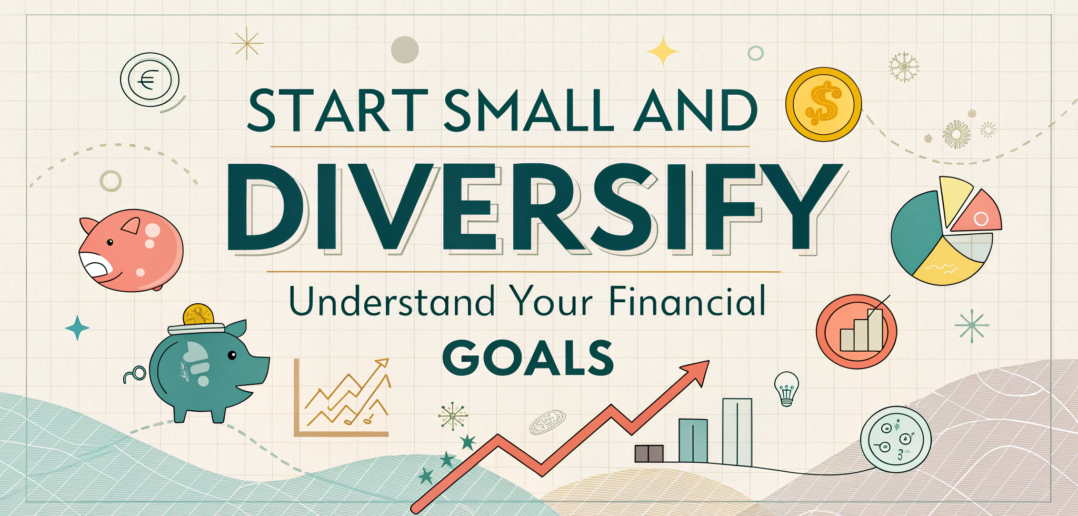
Begin with a manageable amount; even $50–$100/month can grow significantly over time.
Spread investments across asset classes to reduce risk.
Rebalance portfolio periodically to maintain target allocation.
Mini-Case Study:
Sara invested $100 monthly in an ETF tracking the S&P 500 while keeping 20% in bonds. She achieved balanced growth and lower risk.
Step 5 – Monitor and Adjust Investments
Track performance quarterly or semi-annually.
Adjust allocations based on goals, market changes, and personal circumstances.
Avoid emotional decisions based on market fluctuations.
Common Investing Mistakes to Avoid
Lack of diversification
Investing without a clear goal
Ignoring fees and taxes
Chasing “hot stocks” or trends
Reacting emotionally to short-term market changes
FAQs (SEO-Optimized)
Q1: How much should a beginner invest initially?
A: Start small, even $50–$100 per month, and increase gradually as you gain confidence.
Q2: Can beginners invest in stocks safely?
A: Yes, by diversifying, starting small, and using low-cost index funds or ETFs.
Q3: How long should I hold investments?
A: Generally, long-term investing (5–10+ years) is recommended to maximize growth and minimize risk.
Q4: What is diversification in investing?
A: Spreading investments across different asset classes (stocks, bonds, real estate) to reduce risk.
Q5: Are investment apps safe for beginners?
A: Yes, apps like Robinhood, Vanguard, and Fidelity offer beginner-friendly platforms with secure features.
Q6: How often should I review my investments?
A: Quarterly or semi-annually is sufficient for most beginners; adjust as needed.
Internal Links
Budgeting for Beginners
Zero-Based Budgeting Method
Best Budget Planner Apps 2025
External Links
Investopedia – Investing Basics
NerdWallet – How to Start Investing
Vanguard – Beginner’s Guide to Investing