Introduction
avoid procrastination in college. Procrastination is one of the biggest challenges college students face in 2025, fueled by digital distractions, overwhelming workloads, and poor planning. Delaying assignments and study sessions can lead to stress, lower grades, and missed opportunities. The good news is that procrastination can be overcome with practical strategies and consistent habits. This guide provides actionable tips to avoid procrastination in college, including time management techniques, motivation boosters, and focus-enhancing methods. Each strategy includes real-life examples, step-by-step guidance, and common pitfalls to avoid. By implementing these strategies, students can increase efficiency, complete tasks on time, and maintain a balanced academic and personal life. These approaches are suitable for both high school seniors entering college and current college students navigating digital learning environments.
1. Identify the Root Cause of Procrastination
Common causes: fear of failure, lack of motivation, unclear goals, distractions.
Reflect on why you delay tasks and address the underlying cause.
Mini-Case Study:
Aisha realized she delayed writing essays because she feared poor grades. Breaking the essay into smaller tasks reduced her anxiety and procrastination.
2. Break Tasks into Manageable Chunks
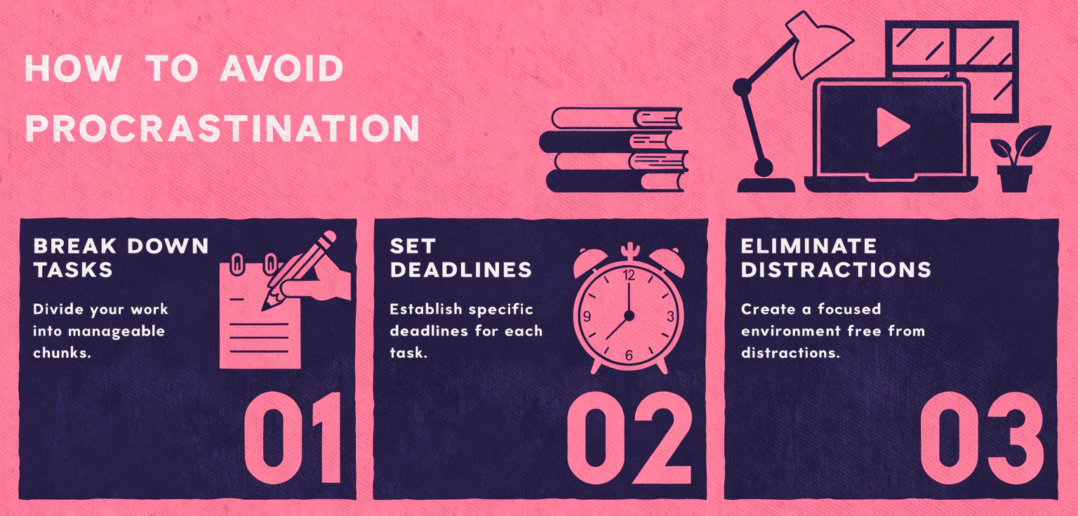
Divide projects into smaller, actionable steps.
Tip: Focus on completing one sub-task at a time.
Benefit: Reduces overwhelm and increases progress.
Example:
Hassan split his term paper into research, outline, writing, and editing stages, completing it one step at a time.
3. Use Time-Blocking Techniques
Schedule specific time blocks for studying, assignments, and breaks.
Tip: Treat these blocks as non-negotiable appointments.
Benefit: Creates structure and reduces the temptation to delay work.
4. Apply the Pomodoro Technique
Work for 25 minutes, then take a 5-minute break; repeat.
Tip: Use a timer or focus apps to stay on track.
Benefit: Enhances focus, reduces mental fatigue, and builds momentum.
Mini-Case Study:
Omar completed his weekly readings faster by following three Pomodoro cycles daily.
5. Eliminate Distractions
Turn off social media notifications, silence phone alerts, and close unnecessary tabs.
Tip: Create a dedicated study space free of interruptions.
Benefit: Allows full focus on the task at hand.
6. Set SMART Goals
Specific, Measurable, Achievable, Relevant, Time-bound goals help maintain clarity.
Tip: Break large assignments into weekly milestones.
Benefit: Keeps motivation high and progress trackable.
7. Reward Yourself for Completing Tasks
Use small rewards like a snack, break, or leisure activity after completing tasks.
Tip: Positive reinforcement encourages habit formation.
Example: Fatima treated herself to a short walk after finishing each study session.

8. Practice Self-Discipline and Consistency
Make studying a daily habit.
Avoid leaving tasks until the last minute.
Tip: Start with small, consistent actions to build momentum.
FAQs (SEO-Optimized)
Q1: Why do college students procrastinate?
A: Common reasons include fear of failure, distractions, unclear goals, and lack of motivation.
Q2: How can I stop procrastinating immediately?
A: Break tasks into small steps, eliminate distractions, and use focus techniques like Pomodoro.
Q3: Is procrastination always bad?
A: Occasional procrastination can be harmless, but chronic delay affects grades and stress levels.
Q4: How can I stay motivated while studying?
A: Set SMART goals, reward yourself, and track progress visually.
Q5: Can time-blocking help reduce procrastination?
A: Yes, scheduling dedicated work periods creates structure and accountability.
Q6: Should I use apps to avoid procrastination?
A: Focus apps like Forest, Cold Turkey, or Pomodoro timers can help maintain discipline.
Internal Links
Productivity Tips for Students
Time Management Techniques for College Students
How to Create a Budget
External Links
Verywell Mind – Overcoming Procrastination
MindTools – Time Management Techniques
Edutopia – Student Productivity Tips